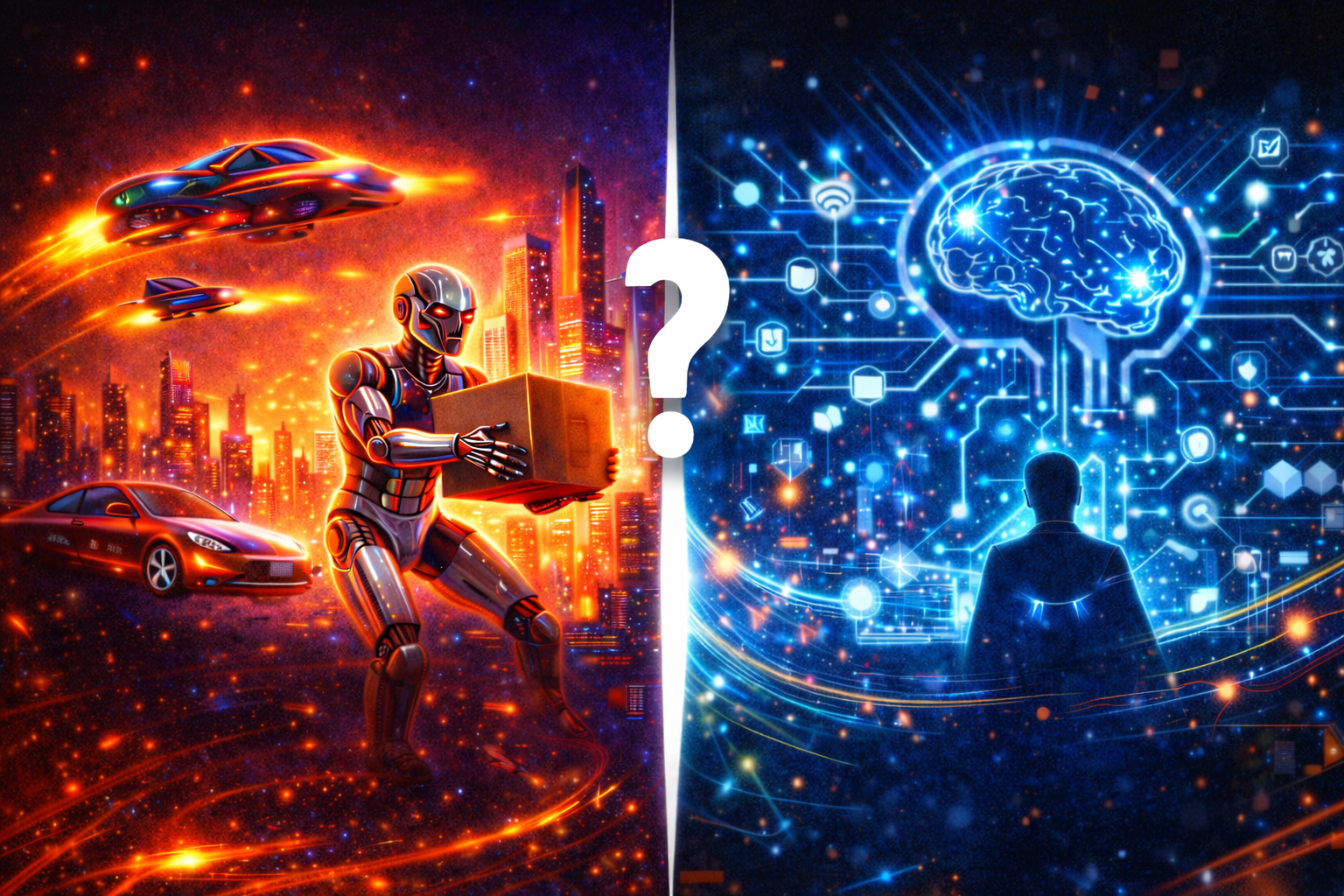

We expected the future to look like flying cars, neon skylines, and robots doing physical work.
That’s the sci-fi we grew up with: technology as objects - robots, ships, hardware everywhere.
Instead, the future arrived as intelligence becoming infrastructure.
Not louder machines.
Not more spectacle.
But intelligence embedded everywhere.
Unlike electricity or computation, this kind of infrastructure doesn’t just power tools. It bleeds directly into decision-making, identity, motivation, and meaning.
On the other hand, software demand is expanding not because we want more apps, but because the world no longer trusts centralized systems. Countries want sovereign tech stacks. Organizations want independence. Individuals want leverage.
AI collapses the cost of coordination.
Founding gets cheaper.
Teams get smaller.
Institutions become shorter-lived by default.
The result isn’t that everyone becomes a unicorn founder.
It’s that companies turn into temporary coordination shells, while people outlive them.
The truth is: we’re in a transition era.
What determines who makes it through isn’t technical skill alone.
Internal adaptation matters.
If you don’t know what you value, ubiquitous intelligence will happily optimize you toward someone else’s objective - platforms, markets, or optimization loops.
This era doesn’t turn humans into obsolete beings because of AI.
It turns us into choice-makers first, workers second.